
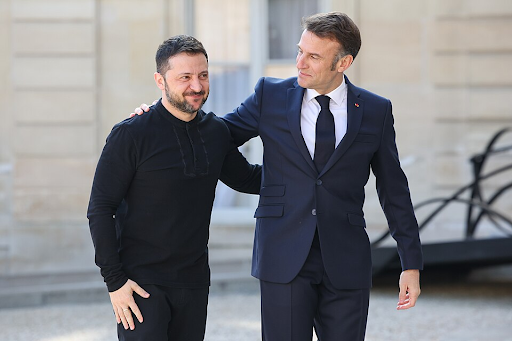
France and Ukraine have entered into a “historical” 10-year defense agreement, establishing a long-term framework for security cooperation and military procurement. This strategic pact, signed by President Volodymyr Zelensky in Paris, is headlined by a preliminary deal for Ukraine to acquire up to 100 Dassault Rafale jets, alongside a comprehensive suite of other advanced weaponry. The decade-long span of the agreement signals a deep and enduring commitment from Paris to Kyiv’s long-term security.
The letter of intent is a direct response to the persistent and evolving threat from Russia. With the war in its fourth year, Ukraine is seeking sustainable partnerships to equip its military for the long haul. The French pact provides this, with individual contracts for each project to be signed over the coming years. This structure allows for a stable and predictable flow of military hardware, a crucial factor as US aid has been halted by the Trump administration.
The pact’s contents are comprehensive, designed to build a multi-layered defense. Beyond the Rafale jets, the agreement includes the purchase of French air defense systems, modern radars, and drones. President Zelensky specifically lauded the French SAMP/T air defense system, eight of which will be delivered to Kyiv. He also announced joint industrial projects to produce interceptor drones, embedding Ukrainian industry into the European defense supply chain.
This massive upgrade is driven by Russia’s brutal escalation of its air war. Moscow’s forces have hammered Ukrainian cities and critical infrastructure with missiles and glide bombs, creating a dire humanitarian situation and threatening blackouts. President Zelensky has made it clear that securing air defense is his single most urgent priority, and this 10-year agreement with France is a significant step toward achieving that goal.
Financing for this long-term endeavor will be drawn from European sources. The French presidency has pointed to the EU’s €150 billion Security Action for Europe (SAFE) loan fund. In addition, President Zelensky has confirmed plans to use a G7-backed mechanism that leverages future revenues from immobilized Russian central bank assets, ensuring that funding streams are in place to support the decade-long commitment.