
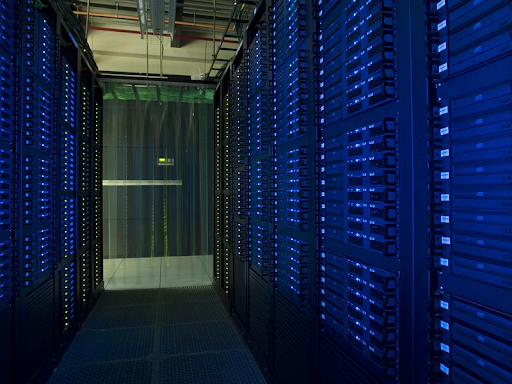
The relentless growth of artificial intelligence is forcing a fundamental rethink of our planet’s infrastructure. With demand for AI compute straining energy grids and water resources, Google has unveiled a bold new plan: move the infrastructure to low-Earth orbit.
This new research initiative, called Project Suncatcher, envisions a future where AI processing is no longer bound by terrestrial limitations. The plan calls for compact constellations of solar-powered satellites, orbiting 400 miles up and packed with Google’s powerful AI chips, known as TPUs.
The logic behind this move is twofold: energy and resources. In space, solar power is vastly more potent—up to eight times more productive than on Earth—offering an abundant and continuous power source. This move would also liberate datacenters from their dependence on massive tracts of land and the millions of gallons of water needed for cooling, a growing concern for an industry set to spend $3 trillion on new facilities.
The economics are also becoming favorable. Google’s research highlights that the rapidly falling cost of rocket launches means that by the mid-2030s, a space-based datacentre might cost no more to run than a terrestrial one. This makes the high frontier an economically viable, not just a theoretically possible, solution.
This is not just science fiction; Google plans its first prototype launches by early 2027. While significant challenges in thermal management and reliability persist, the company believes space may be “the best place to scale AI computers,” setting the stage for a new era of off-planet computation.